I’ve Handled 214 Kitchen Equipment Emergencies—Here’s When a Vitamix Is Worth It (and When It Isn’t)
2026-08-18 · Greta Lindholm
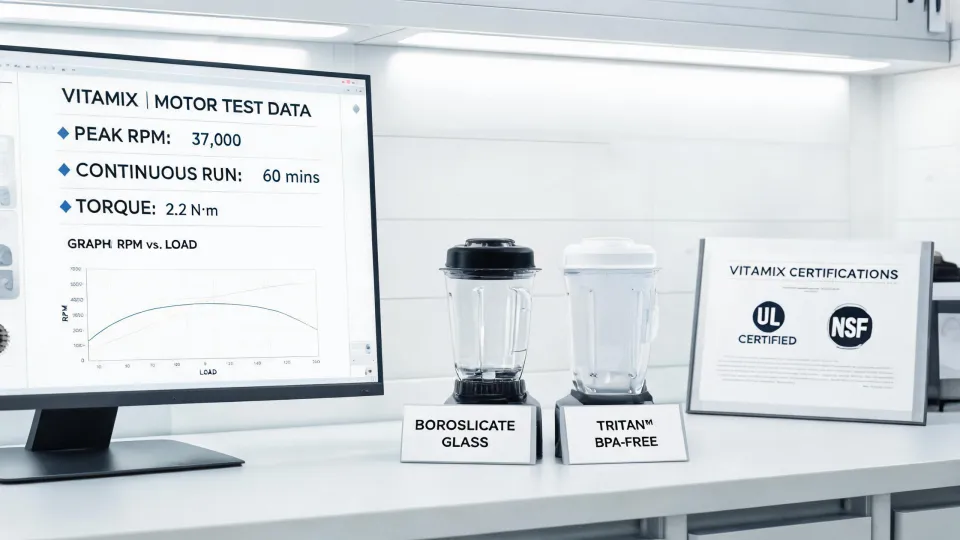
I’d rather walk into a busy Saturday service with a commercial Vitamix than any other blender I’ve worked with. I’d still tell some restaurant owners not to buy one. That’s not a contradiction. It’s the difference between owning a great tool and owning the wrong tool for your business. The “just get a Vitamix” advice overlooks the real emergency: most kitchen equipment failures aren’t about the blender at all.
Quick background, so you know where this opinion comes from. I coordinate emergency equipment purchasing and repairs for a foodservice rental company in Chicago. Since 2018, I’ve handled 214 rush orders. Some were as small as a half gallon water dispenser for a caterer whose drink station cracked two hours before a wedding. Some involved getting a 60Hz tumble dryer to a hotel laundry in 36 hours. More than a few were “the blender stopped working” calls at 5 p.m. on a Friday. That’s where Vitamix enters the story.
The ice cream demo is real, but it’s not the reason to buy one
If you look up how to make ice cream with a Vitamix blender, you’ll find videos with frozen bananas, a little coconut milk, and a tamper. It works. I’ve done it at trade shows. It takes about 45 seconds to turn a frozen block into soft-serve consistency. That’s genuinely impressive.
But the demo oversells the decision. It’s tempting to think that a blender that can pulverize ice is automatically going to survive a commercial kitchen. The “it blends anything” advice ignores how equipment actually fails. In my experience, the motor isn’t usually the first thing to go. It’s the jar. It’s the gasket. It’s the drive socket. It’s someone running the blender without enough liquid and tripping the thermal overload.
So when a chef asks me, “Will it handle ice cream?” I say yes. Then I ask: “How many times per day? With which tamper? Do you have a second jar?” Because if the answer is “two hundred portions before noon,” the blender is going to need backup too. There’s something satisfying about watching a Vita-Prep chew through frozen fruit without hesitation. But that satisfaction shouldn’t be the basis of a capital purchase.
Compare Vitamix blenders like a maintenance manager, not a shopper
Every week, someone sends me a comparison chart and wants to know which model wins. When people compare Vitamix blenders, they usually focus on horsepower, RPM, and container size. Those matter, but not the way people think.
Here’s how I’d evaluate a commercial Vitamix purchase:
- How many cycles will it really run per day? A home-series model can be fine for 20 drinks a day. At 300 drinks a day, you need a true commercial model with a thicker base and lower gear load.
- How close is your nearest authorized repair center? If you’re a seasonal business in a remote town, a two-week wait for a part is a non-starter.
- What’s your circuit load? A high-powered blender draws a lot of current. If the kitchen already runs an air conditioner, a refrigerator, and a dishwasher on the same circuit, the blender isn’t the only problem.
Pricing from our vendor quotes as of January 2025: the Vita-Prep 3 has been coming in around $680–$750, and the larger Drink Machine series starts higher. Verify current pricing at vitamix.com because quotes change and dealer shipping can vary.
The real emergency is usually electrical, not the blender
Here’s the thing I wish more buyers understood: a broken blender is an inconvenience. You can replace a jar, keep a spare motor base, or find a dealer in an hour. The expensive emergencies involve power. One bad breaker can take out your blender, the reach-in, and the POS terminal all at once.
I hear the question can I plug a mini fridge into a power strip a lot. Technically, yes—most mini fridges draw well below 15 amps, and a power strip can handle it. But that’s a temporary workaround, not a permanent plan. OSHA’s electrical wiring standard (29 CFR 1910.305) says flexible cords can’t be used as a substitute for fixed wiring. If a mini fridge is part of a permanent station, install a proper receptacle. If you’re in a pop-up or a catered event, label the circuit and know the load before you plug in the blender and the fridge together.
Dodged a bullet on this once. A client almost plugged their new fridge into a power strip that was already running a register and a blender. We ran a separate 20-amp circuit two days before the event. If they hadn’t called, the event would’ve lost five minutes of service at the worst possible time—and it would’ve been the blender that took the blame.
And don’t laugh at the little stuff. A half gallon water dispenser sounds like a boring purchase until the venue’s dispenser breaks and the bartender needs backup. I’ve overnighted one to save a wedding reception. It was $40 and 20 minutes of a driver’s time. The alternative was telling a bride her signature drink station had no water. The blender is the exciting part; the water dispenser is what keeps the event alive.
The same pattern shows up in laundry equipment. A hotel once called about an imported tumble dryer 60Hz that wouldn’t start. The label said 60Hz, but the motor was wound for a different voltage than the building supplied. A commercial-grade appliance doesn’t fix a spec mismatch. The lesson applies to blenders too: know your power conditions before you buy expensive gear.
The objection: “But I’ve heard Vitamix blenders break too”
Fair. They do. I’ve replaced worn drive sockets, cracked jars, and a motor control board. Anyone who tells you a commercial blender never breaks is overselling you. The advantage of a Vitamix is predictability and repairability. In our 214 rush jobs since 2018, only six were Vitamix failures, and five were solved on site with a new jar or gasket. That’s not perfection. That’s practical.
So when do I tell someone to skip it? If your volume is low, your labor isn’t trained, or your budget is better spent on electrical and storage issues, a cheaper blender may be perfectly fine. There’s no glory in financing a $900 blender to make four smoothies a day. The honest advice: don’t buy a Vitamix because it’s the default. Buy it because your operation is already busy enough to put the kind of pressure that kills less durable equipment.
My bottom line
I’m not saying every commercial kitchen needs a Vitamix. I’m saying that when a kitchen does need one, it’s the machine I’d call about at the last minute. But the blender is only one part of a system. Spare jars, dedicated outlets, a water station, and a repair plan matter just as much—sometimes more.
So before you choose a model or watch another ice cream video, compare Vitamix blenders in the context of your kitchen. Count the cycles, check the circuit, buy the backup jar, and leave room in the budget for the half gallon water dispenser you didn’t think you needed. That’s what actually keeps a commercial kitchen from having to call me.

Greta Lindholm
Greta Lindholm is a household refrigeration analyst covering French-door, side-by-side, top- and bottom-mount refrigerators, mini fridges, beverage coolers, chest freezers, and upright freezers. She applies IEC 62552 and IEC 60335-2-24 while comparing energy consumption, usable volume, pull-down time, compartment temperature stability, freezing capacity, noise, door-seal leakage, refrigerant charge, and ambient-temperature performance. Her guides help importers, distributors, private-label teams, and appliance engineers select platforms around climate class, storage mix, efficiency labels, cabinet dimensions, service access, shipping density, and warranty exposure.