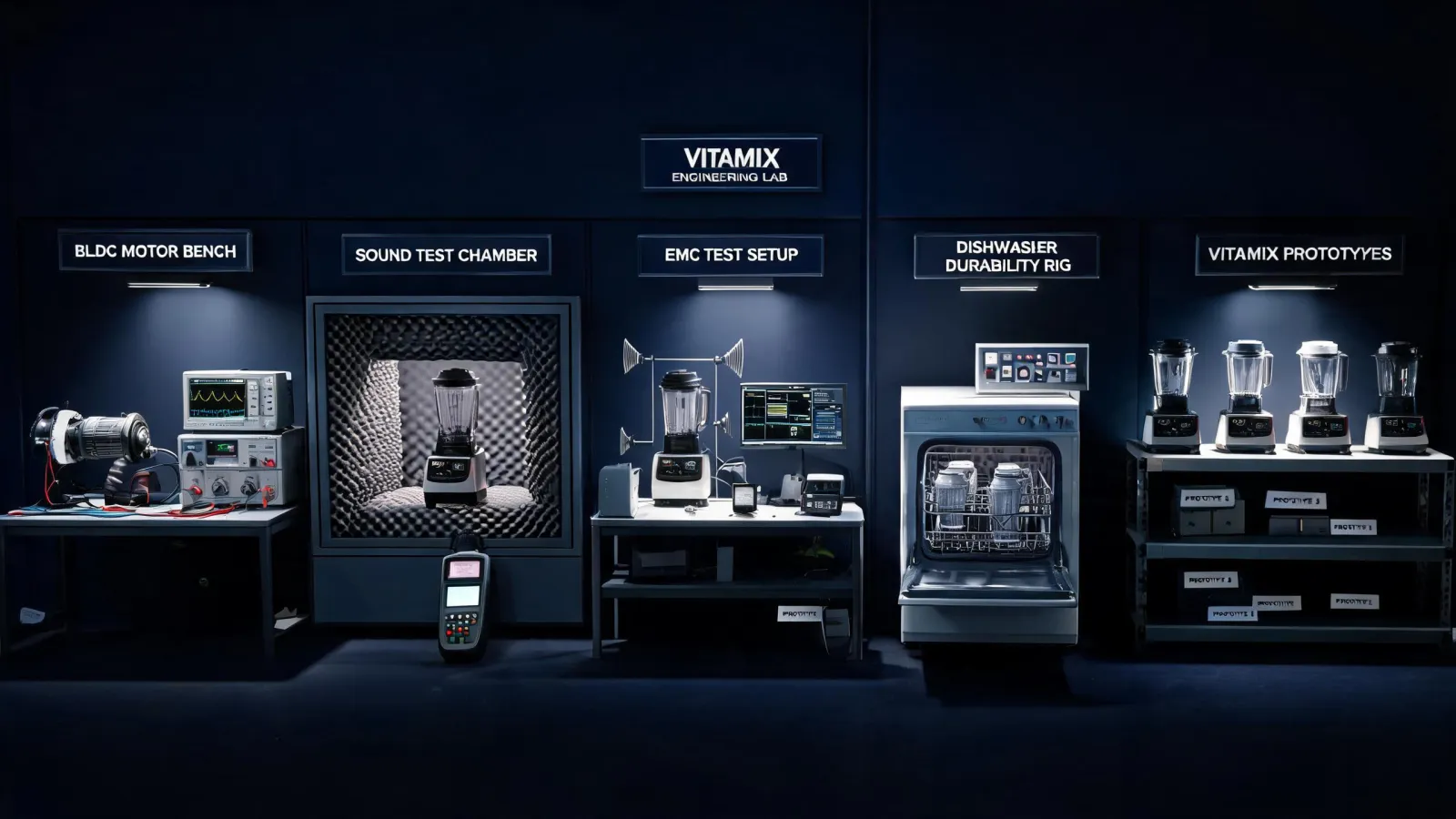
Vitamix engineering lab validation areas
Engineering Lab

38% higher efficiency targets. 12 patent families. One measured ODM route.

The Vitamix lab is built for sourcing teams that need data before they approve a blender program.

12Patent Families
18ISO Procedures
30,000hMTBF Target
<55 dB(A)Sound Option
4Lab Zones
Alternating Key Features

Validation areas that protect blender launch decisions

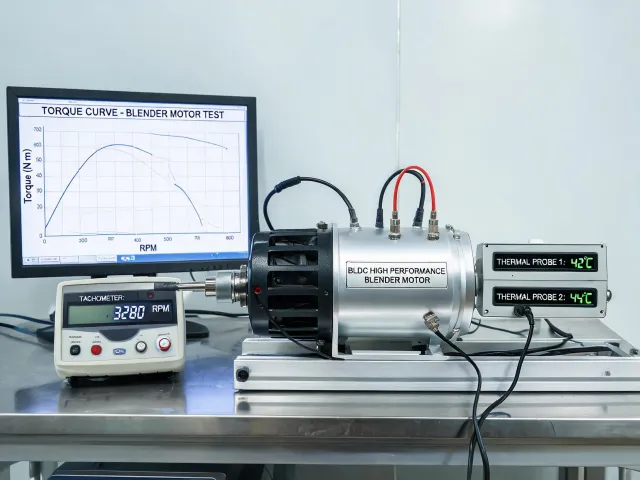
BLDC motor test bench

Motor and torque lab

Motor platforms are reviewed for torque reserve, thermal rise, speed stability and overload protection. The result is a better discussion about real blending duty, not only nominal wattage. Buyers can compare performance, cost and noise tradeoffs before committing to tooling or packaging claims.
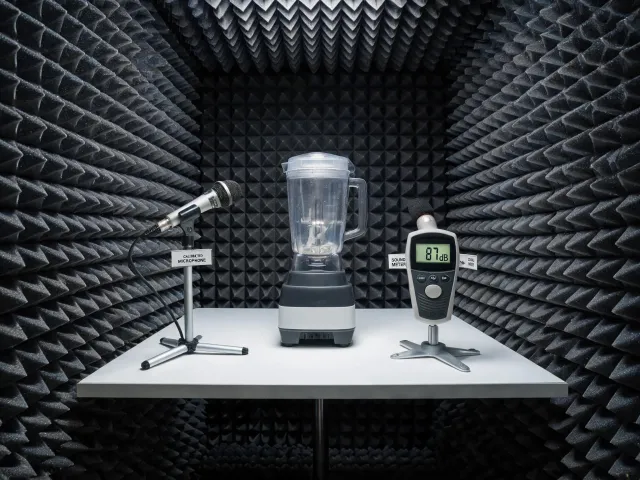
Blender sound chamber

Acoustic chamber

Sound character affects premium retail and hospitality acceptance. Vitamix can compare enclosure, motor, jar and blade configurations under repeatable conditions, giving buyers a clearer path to quiet-line options and realistic product descriptions.

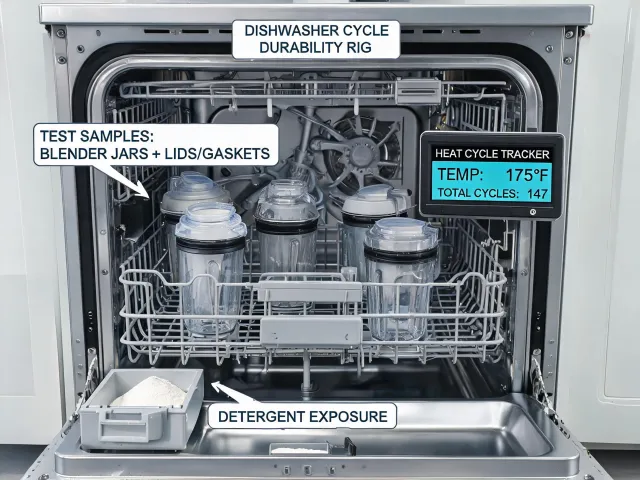
Dishwasher durability test for blender jar

Dishwasher-safe durability

Cleaning claims require more than a sentence on a box. Jar clarity, gasket compression, lid fit and blade assembly exposure are reviewed under repeated wash cycles so the final wording can be backed by visible test evidence.

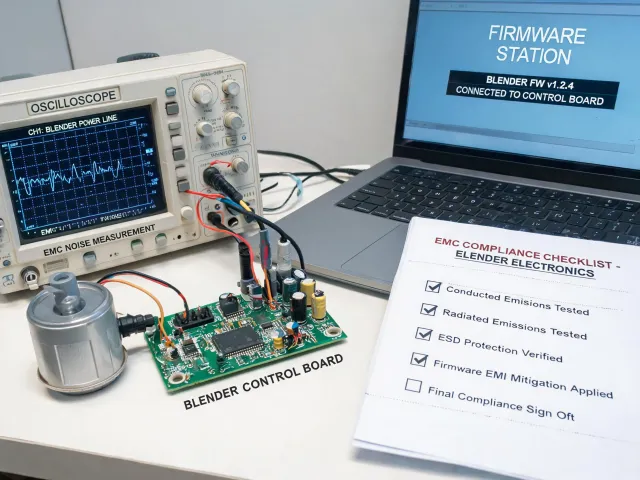
Control board EMC review

Control board and EMC review

Firmware behavior, button logic, safety cutoffs and EMC assumptions are reviewed early. That prevents late-stage surprises when a program enters safety or electromagnetic compatibility evaluation for a new market.

Case Study

Quiet commercial blender line review

A distributor asked for a blender family suitable for juice bars and hotel breakfast counters. Vitamix compared enclosure foam, blade geometry, motor speed control and jar fit, then returned a sample plan with acoustic evidence and spare part recommendations. The buyer could decide whether the quieter path justified the cost before opening a full certification project.

Spec Breakdown

What the lab records before production release

Motor behaviorTorque, speed stability, thermal rise, overload recovery and expected duty cycle.
Mechanical stackBlade, bearing, gasket, jar fit, lid seal and repeated assembly checks.
Cleaning claimDishwasher exposure plan, detergent compatibility and visual retention notes.
Electrical reviewPCB layout assumptions, firmware controls, EMC path and safety cut-off logic.

Engineering choices with sustainability impact

Lower standby draw, longer service life and documented materials all begin in the lab.

E

Energy review

0.5Wstandby target

Control logic can be measured for lower idle consumption.

Read more
M

Material traceability

100%supplier review

Restricted-substance declarations are tied to program approval.

Review path
L

Long-life parts

5modules

Spare parts planning reduces full-unit replacement pressure.

View platforms
Whitepaper Grid

Documents available after RFQ review

Motor validation summary

Torque and thermal evidence format for buyer engineering teams.

Dishwasher-safe checklist

Material and wash-cycle assumptions for public cleaning claims.

Compliance route memo

Market-specific test route options for blender and accessory SKUs.

Engineering RFQ

Ask the lab to review your target specification

Include target wattage, jar volume, acoustic goal, cleaning claim and destination market. The lab will identify the shortest credible route.