Vitamix for Commercial Kitchens: Wet vs Dry Container, Dimensions, and Lessons from a 2024 Renovation
2026-08-19 · Greta Lindholm
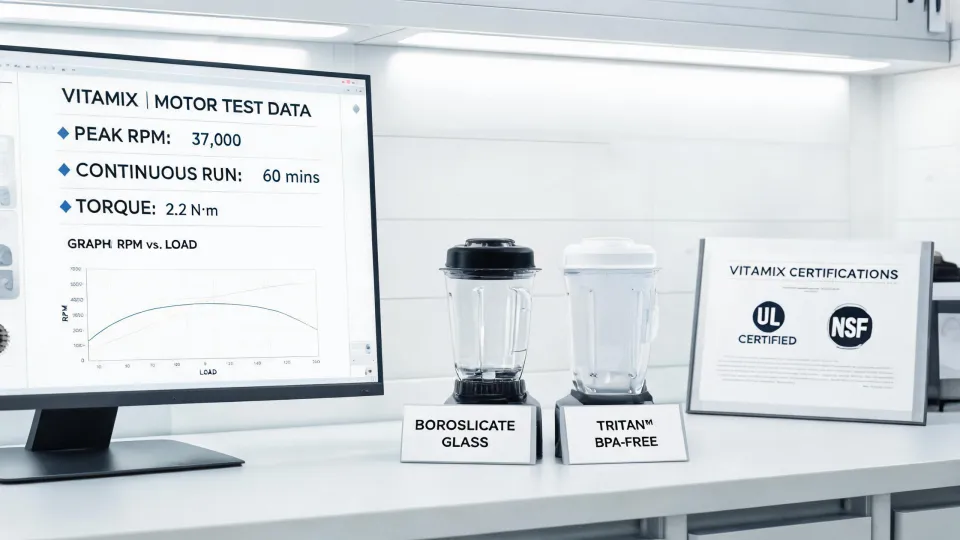
If you're buying a Vitamix for a commercial kitchen, get the 64-ounce wet container and skip the dry container unless you grind ingredients in serious volume. Then measure your counter space the way you'll actually use it—not just the listed footprint, but the full height with the lid on, plus 12 inches of clearance for the tamper. The spec sheet dimensions are only half of what matters.
I learned this the hard way. I manage purchasing for a 60-person marketing agency—roughly $35,000 a year in kitchen and facility supplies across 8 vendors. When we renovated our office kitchen in 2024, I ordered the Vitamix, replaced the wall oven, and added a few things to the staff wellness room. Here's what I'd tell you before you spend the money.
Vitamix blender dimensions: measure the operating space, not the unit
The listed dimensions for a standard Vitamix with a 64-ounce container look manageable: about 7.25 inches wide and 15.5 inches tall. I saw those numbers and assumed it would fit neatly between the coffee maker and the sink. Then I used it for the first time and realized I'd missed the real constraint.
Here's the thing: a working blender needs clearance behind it for the power cord, space on one side for the controls, and open air above it for the tamper. The tamper alone adds 12 to 14 inches of vertical reach. Our counter is 18 inches deep, and the blender takes up about 8.75 inches of that. It fits—but when I'm blending hot soup with the tamper in hand, I have maybe 9 inches of comfortable working room left. Tight is the kindest word for it.
So when you're picking a spot, use the real operating footprint: roughly 12 inches deep, 10 inches wide, and 28 inches of vertical clearance with the lid on. And check under your upper cabinets. We have about half an inch of clearance above ours, which is a constant reminder that I should have measured with the container attached.
Vitamix wet vs dry container: which one you actually need
The theory is simple. The wet container uses a larger, two-prong blade that pulls ingredients into a vortex—that's what makes soups and smoothies silky. The dry container uses a smaller blade profile that creates less suction, so coffee beans, grains, and flour don't pack under it and stall the motor. Both are 64 ounces, and both work exactly as advertised.
Everything I'd read before buying said to get both from the start. The conventional wisdom is that you'll eventually need both, so why make a second purchase later? In practice, over 14 months, we used the dry container exactly eight times. All of them were coffee grinding for staff events.
Real talk: if you run a bakery, a coffee shop, or a kitchen that grinds spices in volume, buy the dry container. It's genuinely the right tool. But for a general office kitchen—smoothies, soups, dressings, the occasional hummus batch—the wet container handles everything. When I compared our wet-to-dry usage side by side, I realized we'd spent $150 on a container that a $30 coffee grinder could have replaced. If I could reorder, I'd skip it.
How the Vitamix fit into our wider renovation
The blender wasn't the only appliance I bought in that project, and each purchase taught me a different lesson. If you're outfitting a whole space, these are worth knowing.
GE 27" single wall oven: cutout dimensions are the spec that matters
I replaced our old oven with a GE 27" single wall oven. The product page said "27 inch," and I assumed that was the rough size of the opening. Wrong. A 27-inch wall oven is a width class, not a cutout size. The actual cutout for the model I ordered was about 25.5 inches wide by 27 inches high—and the old oven had barely a quarter-inch of clearance on each side. If that cabinet frame had been a half-inch tighter, we'd have needed a carpenter.
The timeline also took twice as long as I expected: three weeks for delivery, another week for the installer, and an extra electrician visit because the junction box was off-center. Six weeks total. If your kitchen depends on that oven daily, plan the replacement for a slow period and set expectations with your staff.
Mojoco portable 600W electric clothes dryer: check the outlet first
This one was for the staff wellness room. The Mojoco portable 600W electric clothes dryer is compact, quiet, and does the job—eventually. A 600W heating element means roughly two hours per load, so it's only practical for light use. That's fine for our office. For anything heavier, get a full-size unit.
The mistake I made was not verifying where the nearest outlet was. The dryer ended up three feet from one, which meant an extension cord across the floor. It works, but it's ugly and a trip hazard. If you're buying any portable appliance, measure the distance to an outlet before you order.
Which way should a ceiling fan go in summer? Counterclockwise.
One of our staff complained that the wellness room fan "felt wrong." They were right. Ceiling fans should spin counterclockwise in summer to push air straight down and create a cooling breeze. In winter, switch them to clockwise to gently pull cooler air up and redistribute warm air trapped near the ceiling. It's a five-minute fix, and it cost us nothing.
Where my advice doesn't apply
Let me be clear about the limits of this. My experience is based on one company's office kitchen—60 users and typical office demand. If you're running a high-volume juice bar or a production bakery, you should be looking at Vitamix's commercial line, like the Vita-Prep 3 with the 3-liter container. Those machines have larger blades, bigger containers, and stronger motors, and the container decision changes when you're blending 50 batches a day.
I also verified the numbers in this post against the official Vitamix and GE spec sheets in November 2024. Prices in January 2025 were already about 5% higher than what we paid, and manufacturers update models often—especially Vitamix's Ascent series container designs. Check current specs with your distributor before you commit.
Bottom line: the wet container is the workhorse, the dry container is a maybe, and measuring your operating space is non-negotiable. Get those three things right, and your Vitamix will earn its counter space.

Greta Lindholm
Greta Lindholm is a household refrigeration analyst covering French-door, side-by-side, top- and bottom-mount refrigerators, mini fridges, beverage coolers, chest freezers, and upright freezers. She applies IEC 62552 and IEC 60335-2-24 while comparing energy consumption, usable volume, pull-down time, compartment temperature stability, freezing capacity, noise, door-seal leakage, refrigerant charge, and ambient-temperature performance. Her guides help importers, distributors, private-label teams, and appliance engineers select platforms around climate class, storage mix, efficiency labels, cabinet dimensions, service access, shipping density, and warranty exposure.