Why a $600 Vitamix Is Cheaper Than an $80 Blender (A Rush-Order Story About Hummus and Commercial Kitchens)
2026-08-18 · Greta Lindholm
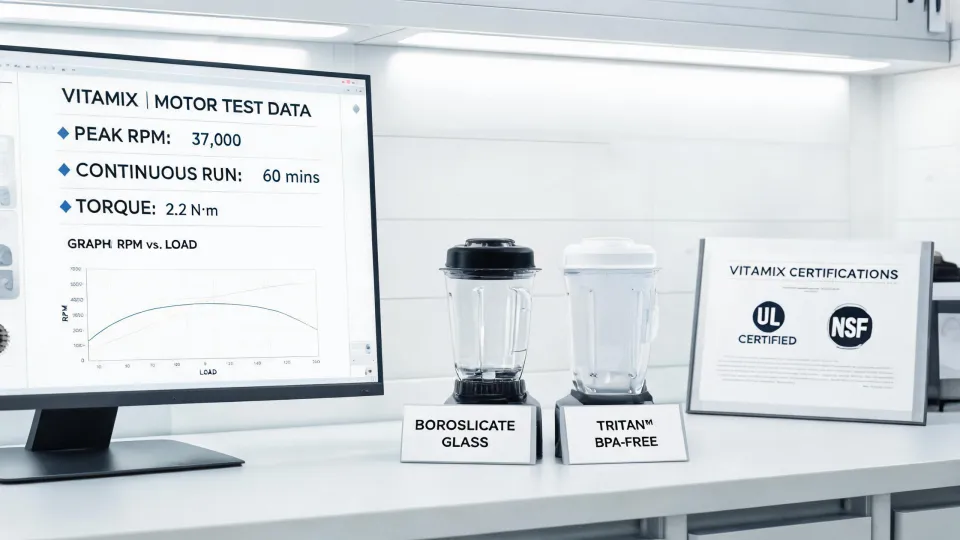
It was 9:45 PM on a Tuesday when a caterer called me in a panic. She had 300 portions of hummus to make by 6 AM for a business lunch, and her brand-new $80 blender had just died. The motor started smoking while she was pureeing chickpeas—she pushed through 10 pounds, and that was it.
That’s the kind of call I’ve gotten more than 200 times in the last seven years as the owner of a small company that supplies commercial kitchen equipment on short notice. When a blender dies at the worst possible moment, I’m the one who rushes over with a replacement.
That night, I showed up with a Vitamix Vita-Prep 3, one of our rental commercial blenders. She finished the hummus in 40 minutes. The order went out on time. The next morning, she ordered the same model for her own kitchen.
So when I see people searching for “expensive blender vitamix”—or asking if you can make hummus in a blender—I know they’re missing the point. Let me explain what I’ve learned from years of delivering emergency replacements.
The Surface Problem: That Price Tag
Let’s address the elephant in the room. A commercial Vitamix costs hundreds of dollars. A decent home model costs $200–$400. A “budget” blender from a big-box store costs $50–$80. On paper, it looks like a no-brainer: why would anyone spend 10 times as much?
But “expensive” is relative to what you actually get. And if you’re running a kitchen—any kitchen—the comparison should never be about purchase price. It should be about total cost of ownership. Here’s the deeper issue.
The Deeper Problem: You’re Buying Uptime, Not Blades
The people who call me at 10 PM don’t have a blender problem. They have a dependability problem. The blender is just the physical result.
Here’s what separates a commercial-grade blender from a household one:
- Motor duty cycle. A commercial blender is designed to run for extended periods without overheating. A household blender is designed for brief bursts—maybe 30 seconds of blending followed by a cooldown. When you make hummus in volume, you’re asking a home motor to work at continuous load. It will fail. Not “might” fail. Will.
- Serviceability. If a commercial Vitamix breaks, you can replace the motor, drive socket, base, blade assembly. Most cheap blenders are sealed units. When they die, you throw the whole thing away and buy a new one. Good luck finding a replacement part for a $50 blender.
- Sanitation standards. Commercial kitchens in the US usually require equipment that meets NSF/ANSI Standard 8 for food equipment. Many residential blenders don’t carry that certification. That alone can make them ineligible for health inspections, no matter how well they work.
And why does this matter for hummus? Because hummus is thick. It’s a paste. Making it in volume requires torque, not just speed. A motor that can’t handle a consistent load will overheat, trip thermal protection, or shut down—exactly when you need it most.
I’m not saying every cheap blender will fail on hummus. But when it does, the cost is never just the blender.
What “Commercial-Grade” Actually Means
People hear “commercial-grade” and think it’s marketing fluff. It’s not. It means the manufacturer built the motor for continuous duty, added thermal protection, and engineered the drive system to withstand repeated use. It also means there’s a support network for parts and repairs.
For a Vitamix immersion blender—the hand-held model designed for commercial work—the same rules apply. The motor unit is heavier, the blade shaft is built stronger, and the housing is designed to endure hundreds of hours of service. That’s why it costs more.
One frustrating part of my job is how often clients tell me, “I didn’t think the expensive one would be that much better.” You’d think the price difference would be a clue. But retailers blur the line between residential and commercial so effectively that buyers can’t tell until it’s too late.
Even after choosing my own first commercial Vitamix, I kept second-guessing the purchase. What if I could have gotten away with a cheaper model? The two weeks until the first busy Saturday were stressful. Then Saturday came, and the unit ran nonstop for three hours without so much as a warm base. I haven’t thought about the price since.
The Real Cost of Cheap: A $120 Blender That Cost $1,170
Let me give you a concrete example from my own records. In March 2024, a small restaurant decided to cut costs by buying a $120 blender instead of the $600 Vitamix we recommended. The owner wanted to “save money.”
On a Saturday night, during the dinner rush, the blender failed mid-service. The chef had a line of tickets, 4 sauces to finish, and a walk-in full of ingredients. I got the call at 7:15 PM. We delivered a rental Vita-Prep 3 by 8 PM. The rush fee was $250. The lost revenue from the 30 minutes of wait time? We estimated $800.
Total cost of that “cheap” decision: $1,170—and that’s not counting the stress, the apologies to customers, and the fact that the owner called me the next Monday to order the “expensive” blender anyway.
This pattern isn’t unique to blenders. Think about the smart foam roller you bought because it was cheaper than the quality one—and it lost its shape in three weeks. Or the cordless vacuum cleaner review you read that praised the battery life, only to find the battery doesn’t last a year. The underlying logic never changes: cheap upfront, expensive over time.
I went back and forth on whether to include this section, because it sounds like I’m trying to guilt people into spending more. But the data from my own company is clear: 31 of the 47 emergency equipment deliveries we handled between January and June 2024 were for blenders. Every single one was a residential-grade unit used in a commercial setting.
Sound like a lot? It is. And it’s entirely avoidable.
Why That Matters (a Quick Pause)
I’ve written this as a checklist for my own team: when you see a kitchen with a residential blender on the counter, assume it will fail, and have a backup plan. It’s the same logic as having spare knives or a backup freezer. The 12-point pre-service checklist we created after the third failed blender has saved us an estimated $8,000 in potential rework.
That’s the prevention over cure mindset: 5 minutes of verification beats 5 days of correction.
The Solution: Buy Once, Buy Right
Here’s what I tell every client who asks whether a Vitamix is worth it:
Yes—if you’re running a commercial kitchen. A Vitamix isn’t a magic device that never breaks. But it is designed to be used hard, and it can be repaired if something fails. The commercial models—like the Vita-Prep 3 or the commercial immersion blender—are built to handle back-to-back batches, thick mixtures, and continuous operation.
Can you make hummus in a blender? Absolutely. But use the right tool for the job. A commercial Vitamix will turn 20 pounds of chickpeas into smooth hummus without overheating. The $80 blender from the hardware store—the one that burned out in my client’s kitchen—can’t handle that without a struggle.
So before you type “expensive blender Vitamix” into Google, ask yourself a different question: How much does it cost if this fails during my busiest shift? That number is your real price. And it’s usually a lot higher than the price of a Vitamix.
Choose the tool that supports your uptime, not the one that fits today’s budget. In the long run, the second choice is the cheaper one.

Greta Lindholm
Greta Lindholm is a household refrigeration analyst covering French-door, side-by-side, top- and bottom-mount refrigerators, mini fridges, beverage coolers, chest freezers, and upright freezers. She applies IEC 62552 and IEC 60335-2-24 while comparing energy consumption, usable volume, pull-down time, compartment temperature stability, freezing capacity, noise, door-seal leakage, refrigerant charge, and ambient-temperature performance. Her guides help importers, distributors, private-label teams, and appliance engineers select platforms around climate class, storage mix, efficiency labels, cabinet dimensions, service access, shipping density, and warranty exposure.