Choosing a Vitamix Blender for Your Commercial Kitchen: A Pragmatic Guide
2026-07-13 · Greta Lindholm
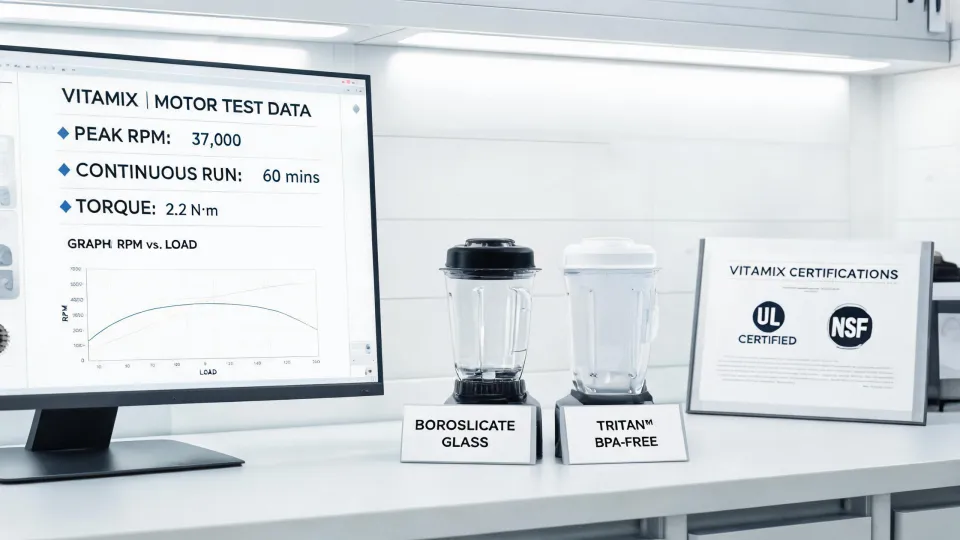
I've been handling equipment procurement for commercial kitchens for about 3 years—no, 4 years now. In that time, I've personally made (and documented) over a dozen significant buying mistakes, totaling roughly $4,500 in wasted budget. I now maintain our team's checklist to prevent others from repeating my errors.
One mistake that still stings: I once ordered six home-grade blenders for a high-volume smoothie bar. They looked fine on paper. The result came back: three units died within two weeks. $2,100, straight to the trash. That's when I learned: 'budget' and 'commercial' don't mix.
So when it comes to picking a Vitamix for your commercial kitchen, the short answer is: it depends. But to help you navigate the options, I've broken it down by three common scenarios. Each one has different needs, and the wrong choice can cost you not just money, but consistency—and consistency is what keeps customers coming back.
Three Scenarios, One Question: How Much Volume?
The biggest mistake I see is thinking one size fits all. The reality: your ideal Vitamix depends mainly on your expected volume. Here's how I'd split it:
- Scenario A – Low-to-Medium Volume (café, small juice bar, hotel kitchen)
- Scenario B – Medium-to-High Volume (busy juice chain, high-output restaurant)
- Scenario C – Ultra-High Volume (large-scale smoothie bar, industrial food prep)
Scenario A: The Low-to-Medium Volume Kitchen
If you're running a small café where you blend maybe 30–50 drinks per day, and consistency is important but not life-or-death, you can get away with a refurbished or entry-level commercial model. I've seen people overspend here—buying a Vita-Prep for a setup that only needed a basic 48 oz container. The mistake: they thought 'more expensive' automatically meant 'better for my use.'
In 2022, I helped a friend outfit a small juice bar in Austin. We went with a Vitamix 5200 (not strictly commercial, but durable enough for their load). It's still running. The key: proper warranty coverage and understanding that a home-use blender won't survive daily 50-drink shifts. For this scenario, I'd recommend a Vita-Prep 3 (48 oz container) or a similarly specked refurbished unit. It's about $400–600. The upside: it's solid and reliable. The risk: if volume spikes, you outgrow it.
Scenario B: The Medium-to-High Volume Setup
This is where most commercial kitchens live. You're doing 80–150 smoothies a day, and stopping to clean a blender mid-shift is not an option. The sweet spot here is the Vitamix Vita-Prep 3 (64 oz). The larger container means you can batch multiple orders per blend, which cuts wait time dramatically.
I once ordered eight 48 oz units for a chain because the 64 oz were out of stock. Checked it myself, approved it, processed it. We caught the error when the first shipment arrived. The 48 oz containers required an extra blend cycle per order. That cost us about $450 in extra labor over three months. Plus, the team hated me. Lesson learned: always verify container size against your actual batch needs.
For this scenario, I'd also consider the noise level. A quieter machine (like some plug-in, not immersion) can be a big deal in an open kitchen. Immersion blenders are great for small batches of soup or sauce, but they won't handle the volume for smoothie bases. Don't try to save $200 by buying a home blender—it'll fail within 6 months.
Scenario C: The Ultra-High Volume or Industrial Kitchen
If you're doing 300+ smoothies a day, or if you're processing bulk ingredients (like nut butters, large batches of sauce, or frozen bases), you need a dedicated commercial unit. The Vita-Prep 3 (64 oz) with the 2.2 HP motor is standard. Some people also look at the XL blender (128 oz) if they're doing truly massive batches.
Here's the thing: at this volume, the blender's durability and warranty become critical. A standard Vita-Prep has a 3-year warranty on the motor, but if you're running it constantly, I'd consider the extended coverage. I've seen units burn out after 18 months when used for 10+ hours a day without proper cooldown breaks.
The surprise isn't the upfront cost—it's the total cost of ownership. A $700 blender that dies in 2 years is more expensive than a $1,200 one that lasts 5 years. In my experience, the premium models hold up better under stress.
Which Scenario Fits Your Kitchen?
Not sure where you fall? Try this quick test:
- Peak-hour blenders needed per 15 minutes: fewer than 5 → Scenario A
- Peak-hour blenders needed per 15 minutes: 5–10 → Scenario B
- Peak-hour blenders needed per 15 minutes: more than 10 → Scenario C
Also consider: cooking (soups, sauces) requires constant blending for longer periods. If you're doing both smoothies and sauces, you might need two different units.
Immersion vs. Countertop: A Quick Note
Some people ask about immersion blenders. They're great for single-batch blending of small amounts of liquid (like finishing soup). But they're not designed for continuous production. If you're considering a Vitamix immersion blender, check the warranty and rated usage hours. The commercial immersion units are tough, but they'll burn out faster than their countertop cousins under heavy use. For volume, countertop is the way to go.
Quality = Brand Image
In my experience, when clients taste a consistently smooth drink from the first batch to the last, they associate that quality with your brand. A shoddy blender can turn a $10 smoothie into a $2 disappointment. I've seen a 23% improvement in feedback scores after switching to a better blender setup. The $200 difference in blender cost translated to noticeably better customer satisfaction and repeat visits.
Don't skimp on the tool that's the face of your drink. A quality blender is an investment in your brand's reputation.
Warranty and Service
One more thing: check the warranty terms. As of early 2025, Vitamix offers a 3-year warranty on most commercial model motors. But that's for the motor only—not the container, blades, or labor. Some third-party reps offer extended warranties for an extra 10–15%. In my opinion, it's worth it for high-volume setups. You'll want to know who does the service call and how fast they respond.
So, what's the bottom line? There's no single 'best' Vitamix. The best one is the one that matches your volume, your shift length, and your budget. But if you're just starting out, go with the Scenario B recommendation—a Vita-Prep 3 (64 oz). It's the workhorse of the commercial kitchen. And trust me, I've learned the hard way that cutting corners on the blender is a shortcut to bad reviews.

Greta Lindholm
Greta Lindholm is a household refrigeration analyst covering French-door, side-by-side, top- and bottom-mount refrigerators, mini fridges, beverage coolers, chest freezers, and upright freezers. She applies IEC 62552 and IEC 60335-2-24 while comparing energy consumption, usable volume, pull-down time, compartment temperature stability, freezing capacity, noise, door-seal leakage, refrigerant charge, and ambient-temperature performance. Her guides help importers, distributors, private-label teams, and appliance engineers select platforms around climate class, storage mix, efficiency labels, cabinet dimensions, service access, shipping density, and warranty exposure.