5200 Vitamix Blender: Why It's Cheaper Than the Cheap Option
2026-09-16 · Greta Lindholm
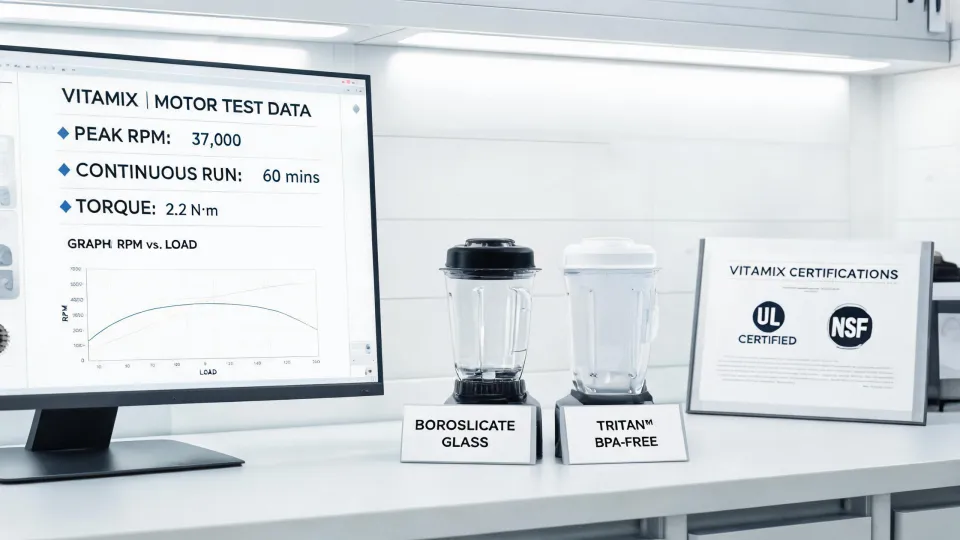
Six years ago, our first juice bar opened with a single 5200 Vitamix blender. That same machine is still in that building today, working as a backup after years of daily use. Since then I've managed equipment buying as we've grown to 11 locations. So when someone tells me the 5200 is overpriced, I understand the objection. But the data from our own purchase orders tells me it's one of the cheapest things we own.
Here's the position I've landed on: the most expensive blender a foodservice operation can buy is a cheap one. The cheap machine doesn't need to break on day one to hurt you. It can fail slowly, in the middle of a rush, or when the motor starts sounding tired and the crew adds a little more liquid to keep the blades spinning. Every one of those workarounds becomes a tiny quality problem for the customer.
Full disclosure: our highest-volume stores now use Vitamix Vita-Prep 3 units. The 5200 is still a workhorse for backup, training, and slower shifts. The exact model matters less than what it taught me: durability is part of total cost, not a luxury feature.
The invoice is not the whole cost
In late 2023, I audited purchase orders and repair tickets from two stores that had opened around the same time. One store bought a single 5200 Vitamix blender and spent zero dollars on repairs over the next 26 months. The other store bought a budget blender for $280, then a second one after the motor seized at month 14, then a third after the replacement started leaking around the base. Total replacement cost: $840 plus shipping and the manager's time. Add another $120 in parts for the leak attempt before they gave up. That's nearly $1,000 for one station, compared with zero for the Vitamix station.
The budget machines failed in different ways, but the pattern was the same. The first one sounded fine until it stopped. The second had a container that began leaking after a few months, and the leak ruined a batch of ingredients before anyone noticed. The third one arrived with a wobble at high speed. Each failure created a moment where staff stopped focusing on the menu and started managing equipment problems.
Every cheap blender comes with a warranty, but a warranty doesn't cover the hour your manager spends on hold, the shipping box you have to find, or the backup blender you borrow from another location. A warranty is a safety net, not a production plan.
The dishwasher question is a distraction
Another question that comes up all the time is about 'vitamix in dishwasher.' As far as I know, most Vitamix containers are dishwasher-safe, at least on the top rack. But I don't treat the dishwasher as the default. In a commercial kitchen, the issue isn't only whether the container can survive a dishwasher. It's whether the station stays available during a rush.
We timed the cleaning process at our best-run store. Rinsing a container immediately after service, adding warm water and a small drop of soap, running it on the cleaning setting, then rinsing again took less than a minute. Waiting for a dishwasher, even a fast one, meant the container sat in the dish pit until there was enough to run a full load. In that time, residue dried and the station stayed dark. If a blender lid or container is dishwasher-safe, fine. But the decision should be about speed and cleanliness, not fear of the dishwasher.
Texture is not a small detail
The thing that changed my mind wasn't a spreadsheet. It was watching a new trainee struggle with a budget blender that couldn't break down frozen fruit. She added more orange juice to get the blades moving, which made the drink watery. The customer didn't complain, but they didn't return either. A blender is the last machine that touches the product before the customer sees it. If it doesn't make the same texture every time, your brand becomes inconsistent.
One of the best quality tools we introduced is not a new blade or more training. It's a blender reference image, taped near the station. The photo shows exactly what a finished drink should look like: thick, smooth, and free of unblended pieces. Staff compare every drink to that reference before handing it out. That simple checklist won't save a bad machine. It just proves the machine is the problem. And if the machine is the problem, it's worth the money to replace it.
What if the budget really can't stretch?
Look, if you're opening with a tiny budget, I'm not going to tell you to take on debt for a commercial blender. But between a brand-new cheap machine and a certified refurbished or used high-quality blender from a reputable source, I'd choose the used high-quality one every time if your volume is steady. Staff can learn a machine quickly. They can't learn around a machine that stops blending halfway through a cup.
The same total cost mindset applies outside the blender station. When we evaluated split heat pump water heaters for a recent build, the lowest quote wasn't the cheapest option after I calculated operating cost and warranty coverage. And when an old Kenmore dryer lost heat, replacing the dryer heating element was a fraction of the cost of a new dryer and took under an hour of labor. Get past the sticker price and the equipment decisions get easier.
So I'll keep approving the blender purchase that looks expensive on the invoice. It's not because I have a favorite brand. It's because I've seen what a breakdown costs when you count the lost service, the watery drinks, and the customer who doesn't come back. The cheapest equipment isn't the lowest price. It's the machine you can rely on.

Greta Lindholm
Greta Lindholm is a household refrigeration analyst covering French-door, side-by-side, top- and bottom-mount refrigerators, mini fridges, beverage coolers, chest freezers, and upright freezers. She applies IEC 62552 and IEC 60335-2-24 while comparing energy consumption, usable volume, pull-down time, compartment temperature stability, freezing capacity, noise, door-seal leakage, refrigerant charge, and ambient-temperature performance. Her guides help importers, distributors, private-label teams, and appliance engineers select platforms around climate class, storage mix, efficiency labels, cabinet dimensions, service access, shipping density, and warranty exposure.