Why Your Vitamix Explorian E520 Died Right Before Service (and What That Tells You About Your Kitchen)
2026-08-26 · Greta Lindholm
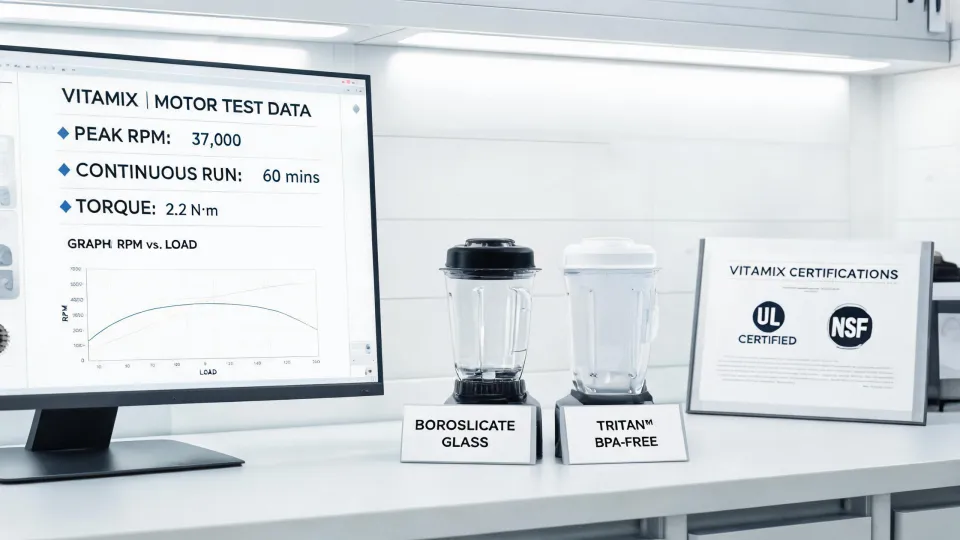
It was a Friday, about 4:30 p.m., when the call came in. A restaurant had a Vitamix Explorian E520 64-oz blender that just stopped mid-batch. They needed 12 gallons of vinaigrette in 90 minutes. The local appliance store had one in stock, but it was a display model and the manager wouldn't sell it. The earliest replacement could arrive was Tuesday, three days after their busiest weekend of the month.
I do emergency repairs for commercial kitchens. Over the past few years, I've dealt with maybe 200 rush jobs—some as small as a replacement gasket, some requiring a full blender swap within 48 hours. Missing a deadline in this business isn't a minor inconvenience. For one client, it meant losing a contract worth about $15,000 a year in catering orders. So when I get a call like that, my first question isn't "What's the fastest way to fix this?" It's "Why did this happen in the first place?"
The Problem Isn't the Blender. It's Everything Before It.
Everyone thinks the problem is the machine. A motor burned out. A cracked container. A faulty switch. But a motor doesn't just burn out on its own. By the time a blender stops working, it's been trying to tell you for a while—you just haven't been listening.
Take that E520 from the opening story. When I asked the staff if the blender had made any noise before it died, the line cook mentioned a grinding sound "for about two weeks." That's a red flag. It probably meant a bearing was wearing down. If they'd raised the issue then, a $40 part might have fixed it.
What Actually Causes Mid-Service Blender Failure
The Warning Signs You Ignore
Blenders in a commercial kitchen take a beating. But they're not supposed to sound like a coffee grinder at full speed. Squealing, vibration, or a burning smell are not "character." They're failures that haven't happened yet.
I've made the same mistake myself. I bought a used commercial unit for a test kitchen a few years ago. I knew it made a weird noise, but it was a deal—about $300 below used market price. It died a month later during a recipe shoot. We paid $220 for the replacement part anyway, so there went the savings.
The Cheap-Parts Trap
When a blender breaks, the internet offers plenty of prices that look good at first. But here's something I learned the hard way: parts for Vitamix blender aren't a place to save money. The tolerances matter as much as the price.
It's like color matching in printing. Pantone's system lets brands specify an exact color. If you print a logo and the color is slightly off—Delta E between 2 and 4, for example—most people won't notice until they compare it side by side with the official color. But when it matters, you need precision. The same logic applies to a blender drive spline or a container base. A non-genuine part might fit at first. It might even run. But under load, it can fail—sometimes damaging the motor or leaking onto your prep table. And you won't know until you're mid-service.
I'm not saying you need to understand a dryer heating element wiring diagram to troubleshoot a blender. But understanding that electrical and mechanical components have to match specifications is the difference between a quick fix and a repeat breakdown. If you're looking for a wiring hack to bypass a safety feature, that's a deal-breaker for me.
Power Problems You Wouldn't Expect
Another common cause is something as stupid as a small space heater. I've walked into kitchens where the blender was on the same outlet as a countertop heater. When the heater kicked in, the voltage sagged. The blender motor strained harder, overheated, and eventually died. One kitchen manager kept replacing blenders every few months because he didn't believe a $20 heater could cause a $600 repair bill. Take it from someone who's seen this more than once—give the blender its own circuit or at least unplug heavy appliances when it's running.
Food Storage and Cleaning Are Part of the Equation
What does food safety have to do with blender failure? More than you'd think.
Consider beef stew. The USDA says cooked beef stew is safe in the fridge for about 3-4 days. After that, bacterial growth becomes a real risk. If you're prepping large batches for a busy week, knowing how long is beef stew good in the fridge is essential. But here's the connection: if you're storing a blender container half full of cold soup for days because you think it's a storage vessel, you're putting stress on the seals and the blade base. Acidic ingredients and moisture can break down gaskets and cause leaks. Then someone over-tightens the base to stop the leak, and the threads crack.
The habit of keeping a clean, dry blender between uses isn't just about hygiene. It's about equipment longevity.
What a Breakdown Really Costs You
Let's put numbers on this, because "it's expensive" doesn't mean anything until you see it.
When we had to source a replacement part for a customer's Vitamix on a Sunday morning, the normal cost was $120. The overnight service fee was $85. The vendor also charged a weekend handling fee of $40. So a $120 part became $245, plus we paid overtime for a technician to install it. That's about double. If your budget is tight, that's a painful hit. But it's still less than the cost of closing a dining room on a Saturday night.
And there's the part nobody puts on the income statement: what customers perceive. If you've ever sat in a restaurant while the staff tells you the soup of the day is unavailable because "the blender broke," you know how that feels. It looks like poor planning, even if it's just bad luck. It shapes the way people judge the whole operation. That's why quality here isn't about snobbery—it's about consistency.
What We Do Differently Now
After enough emergencies, I became a fan of boring maintenance.
- Put the blender on its own circuit. If a small space heater overloads the line, that's a problem you can prevent in five minutes.
- Buy genuine parts from a reliable distributor. Yes, they cost more. But they're made to the same spec as the original, and that's what keeps the motor safe.
- Listen for warning signs. Grinding, skipping, or excess vibration means something is off. Stop using it and write down what you hear. It could save you hundreds in later repairs.
- Keep a backup. For a busy kitchen, having a spare blade assembly and container is a no-brainer. It's a few hundred dollars, but it can cover you during the 3-5 days it takes to get a proper repair scheduled.
- Clean the container thoroughly and air-dry it. Don't leave soup or stew sitting in it for days. It's a food-safety hazard and a maintenance problem.
I should note—I'm not a chef. There are food service professionals who know a lot more about USDA guidelines and safe storage times than I do. But I've spent enough time in the back-of-house to know that equipment failures are rarely about one big event. They're a chain of small decisions that get ignored until there's a deadline staring at you.
So before you blame the blender, look at the pattern. The machine might be telling you about the process around it.

Greta Lindholm
Greta Lindholm is a household refrigeration analyst covering French-door, side-by-side, top- and bottom-mount refrigerators, mini fridges, beverage coolers, chest freezers, and upright freezers. She applies IEC 62552 and IEC 60335-2-24 while comparing energy consumption, usable volume, pull-down time, compartment temperature stability, freezing capacity, noise, door-seal leakage, refrigerant charge, and ambient-temperature performance. Her guides help importers, distributors, private-label teams, and appliance engineers select platforms around climate class, storage mix, efficiency labels, cabinet dimensions, service access, shipping density, and warranty exposure.