Vitamix or Not? What I Learned After 5 Years of Buying Commercial Blenders for Our Restaurant Group
2026-07-17 · Greta Lindholm
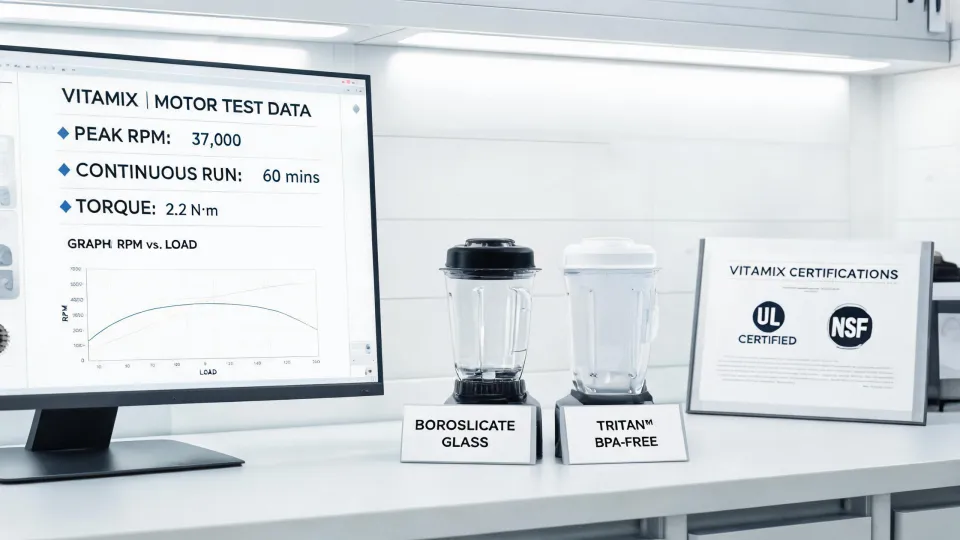
If you're running a high-volume commercial kitchen, the answer to 'Vitamix or Ninja?' is straightforward: Vitamix. No 'if,' 'but,' or 'maybe.' For a smoothie bar, hotel kitchen, or juice shop processing gallons daily, Vitamix is the only reliable choice. Period.
I'm the administrative buyer for a group of 8 restaurants. Been managing our equipment purchases since 2020. When I started, I assumed all 'high-performance' blenders were essentially the same—just different price tags. I was wrong. That mistake cost us roughly $1,800 in downtime and repairs in the first year alone.
Here's what I've learned, the hard way, about choosing a commercial blender. I'll cover Vitamix vs. Ninja vs. Nutribullet, how to handle a specific task like making ice cream, and the hidden costs that don't show up on a spec sheet.
The Short Answer: Why Vitamix Wins for Business
For a commercial setting, you need a machine that can run for hours, handle frozen ingredients and tough fibers, and keep doing it for years. In my experience, only Vitamix consistently delivers on all three.
I manage orders for 400+ employees across our locations. When we needed to standardize our blenders in 2022, we tested three models head-to-head for a month. Here's the breakdown from a buyer's perspective:
- Vitamix (e.g., Vita-Prep 3): Handled everything we threw at it. Frozen fruit, kale, ice, even the trial batch of cashew butter. No overheating, no weird smells. Motor felt solid. Price: ~$600-800. But the warranty (3 years for commercial) and parts availability made it a long-term bet.
- Ninja (Commercial line): Cheaper, initially. ~$300-400. Seemed powerful. But the plastic pitcher cracked after 4 weeks of heavy use. Motor started making a labored sound by week 6. Not built for continuous duty. Repairs took weeks.
- Nutribullet: Great for a single personal smoothie. Not designed for the volume of a restaurant. The blade base overheated after 5 back-to-back blends. A total non-starter for us.
The conclusion from that test was clear: the 'budget' options weren't cheaper in the long run. They were more expensive, due to downtime and replacement.
A Deeper Look: Making Ice Cream in a Vitamix
One of our chefs wanted to offer fresh, made-to-order ice cream. A friend told him you could make ice cream in a Vitamix using frozen fruit and cream. So, we tried it.
It works. Really well. The high-speed motor and blade design create enough friction to turn frozen ingredients into a smooth, soft-serve consistency in under a minute.
Here's the thing: it works because of the motor's power and the design of the container. The tamper is essential for pushing ingredients down. This isn't a 'hack'—it's a feature of the design. A $100 blender would just burn out trying to do this. Making 20 batches back-to-back? Only the Vitamix could handle it without tripping its thermal protection. (Ugh, we learned that the hard way with a cheaper model on our test bench.)
Vitamix vs. Nutribullet vs. Ninja: The Real Differences
Most online reviews compare these for home use. That's a different game. In a commercial kitchen, the key differences are:
- Motor Duty Cycle: Vitamix commercial blenders are rated for continuous use. Ninja and Nutribullet are not. This means they will overheat and shut down if you push them. That's a disaster during a lunch rush.
- Build Materials: The Vitamix container is made from a specific polycarbonate. It's tough. The Ninja's plastic is thinner and more prone to cracking, especially with hot liquids or heavy ice. (I've seen it happen.)
- Parts & Service: Vitamix has a robust parts network. If a blade assembly fails, I can get a replacement in 48 hours. For Ninja or Nutribullet, you're often buying a whole new machine. That's a failure from a business continuity standpoint.
What most people don't realize is that 'standard' for a home blender doesn't mean it can handle the volume of a busy coffee shop. The motor in a Vitamix commercial is a different class of component. It's not just 'more powerful'; it's designed for a different lifespan.
The 'Aha' Moment (and a Mistake I Won't Repeat)
In my first year, I made the classic rookie mistake: I went with a cheaper alternative (the Ninja) to save on initial capital. The savings was about $300 per unit. I felt smart.
But that 'budget vendor' choice cost us. In the first six months, we had two motor failures during service. The repair time was 3 weeks each. We lost an estimated $2,400 in sales from those two outages (cost of a backup blender, and lost customer goodwill). Plus, I had to explain the delay to my VP of Operations. Not a good look. (Finally, we had to buy the Vitamixes anyway. Net loss for choosing the 'cheap' option: over $1,500.)
That experience cemented my view: in a commercial environment, reliability is the price of entry. The 'cheaper' option is an illusion. The Vitamix, despite its higher upfront cost, has the lowest total cost of ownership.
One Last Thing: The Other 'Keywords' in Your Search
I noticed your search terms included things like 'frigidaire 24 single gas wall oven' and 'samsung smart switch data transfer screen.' That tells me you might be looking for information on multiple appliances or tech. That's out of my wheelhouse for a blender article! For the blender choice, trust the real-world, high-volume test. For the oven or the phone, I'd be guessing. But for blending, I'm sticking with the data.

Greta Lindholm
Greta Lindholm is a household refrigeration analyst covering French-door, side-by-side, top- and bottom-mount refrigerators, mini fridges, beverage coolers, chest freezers, and upright freezers. She applies IEC 62552 and IEC 60335-2-24 while comparing energy consumption, usable volume, pull-down time, compartment temperature stability, freezing capacity, noise, door-seal leakage, refrigerant charge, and ambient-temperature performance. Her guides help importers, distributors, private-label teams, and appliance engineers select platforms around climate class, storage mix, efficiency labels, cabinet dimensions, service access, shipping density, and warranty exposure.