Transparent Pricing Is a Quality Spec: What I Check Before Approving a Commercial Vitamix Blender Quote
2026-09-16 · Greta Lindholm
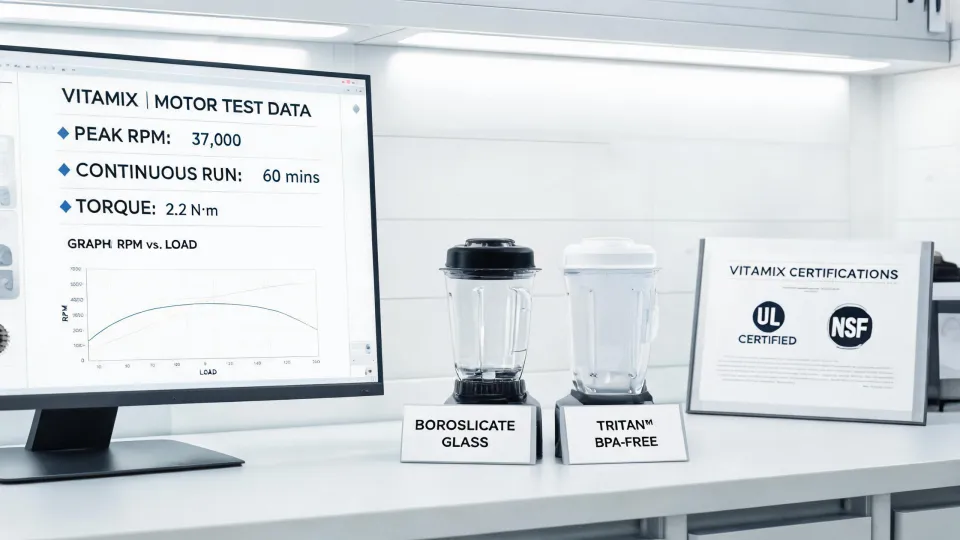
My unpopular rule for commercial blender quotes
If a commercial blender quote looks like the cheapest option, I assume it is hiding something. I would rather pay more upfront with every line item visible than save 10% now and discover the real cost after delivery.
That is not a theoretical position. I am a quality and brand compliance manager at a commercial kitchen equipment company. I review specs, samples, and vendor documentation for roughly 180 items a year. In 2024, I rejected about 22% of first deliveries. Not because the motors were bad. Because the paperwork, the included parts, or the warranty terms did not match what we thought we bought.
When a buyer asks me about a commercial blender Vitamix, a Vitamix bullet blender, or a generic high-volume machine, I ask the same first question: 'What is not included?'
Why hidden fees feel cheaper—and why they are not
The psychology is simple. A base-unit price is easy to compare. Freight, liftgate fees, installation, water filtration, replacement gaskets, blade assemblies, extended warranties, and downtime are harder to line up. Vendors know this. The quote that leaves those out often wins the first meeting. It rarely wins the audit.
In Q1 2023, we received a batch of 90 blenders from a vendor that had quoted about 15% below the next option. The spec sheet said 'commercial grade.' When I checked the motor duty cycle against our requirement, it was rated for intermittent use, not the continuous service we needed for a juice bar. The vendor claimed it was 'within industry standard.' We rejected the batch. They redid it at their cost, but our launch slipped by three weeks and we spent about $18,000 in expedited freight and temporary rental units.
Now every contract includes a total-cost worksheet. If a vendor cannot fill it out, that is a signal.
The line items I want visible before I approve
- Base unit price and model number, not just 'Vitamix commercial'
- Freight, liftgate, and inside delivery
- Setup or installation requirements
- Consumables: gaskets, blades, containers, and coffee machine water filter replacements if bundled
- Warranty terms by use case—commercial versus home, continuous versus intermittent
- Rush fees and lead-time penalties
I do not need every line to be cheap. I need every line to be true.
The counterintuitive part: brand premiums can lower total cost
Everything I had read about procurement said the lowest-cost qualified vendor should win. In practice, for high-volume kitchens, the math often flips. A recognized commercial platform like Vitamix is not cheap. But when I compared two years of repair tickets, the cheaper machines had more variance—more gasket failures, more blade vibration, more 'why is it down again?' calls.
I cannot promise zero downtime. I cannot promise a blender will never need maintenance. Anyone who says that is selling a story, not a spec. What I can say is that uptime data matters more than sticker price. A machine that costs 20% more but stays in service during Friday dinner rush is cheaper than a bargain unit that dies on Saturday.
According to Vitamix's commercial warranty documentation, coverage varies by model and use case (vitamix.com; verify current terms). That is exactly why I want the warranty language in the quote. If a vendor glosses over it, I assume the gap will show up later.
That is why I treat transparency as a quality spec. If a vendor lists the maintenance schedule, the expected duty cycle, and the parts that wear out, I trust them more—even when the total looks higher.
The same rule works for smaller kitchen purchases
I am not the right person to rank the best home IPL hair removal devices. I am also not going to explain how to reactivate sourdough starter from fridge—though I respect the search intent. But the logic is the same: the advertised price is rarely the real price.
With an IPL device, you have replacement bulbs or cartridges. With a coffee machine water filter, you have a replacement interval that can add hundreds of dollars a year. With sourdough, you have flour, time, and temperature. With a commercial blender, you have gaskets, blades, and service labor.
If you are comparing a Vitamix bullet blender for a home kitchen against a commercial blender Vitamix for a cafe, do not just compare watts or pitcher size. Compare what happens after month six. Who supplies the parts? What does the warranty actually cover? What is the process when a seal fails during service?
'But the transparent quote is more expensive.'
Yes. Often it is. That is the point.
A transparent quote includes the ugly stuff: freight, filters, training, and the replacement part you will need in 14 months. A low quote hides those costs until you are already committed. I have learned to ask 'what is not included' before 'what is the price.' The vendor who lists all fees upfront—even when the total looks higher—usually costs less in the end.
According to NSF International, commercial powered food preparation equipment should meet NSF/ANSI 8 for sanitation and design (nsf.org, 2024; verify current standards). That standard does not tell you which blender to buy. It tells you that commercial use has different rules than home use. The quote should reflect those rules.
'The lowest quoted price often is not the lowest total cost. The lowest total cost is the price you can verify before you sign.'
What I tell my team now
I do not reject a quote because it is expensive. I reject it because it is vague.
If you are specifying a Vitamix commercial blender, ask for the all-in number. Ask for the warranty terms in writing. Ask what consumables you will buy in year one. Ask about duty cycle, ventilation, and water quality—especially if you are also running a coffee program with a coffee machine water filter. Ask what happens if a batch fails inspection.
That last question is the one that separates a real partner from a price sheet. A real partner gives you a number that survives contact with the loading dock.
A quick transparency test
Before I approve any blender order, I run a five-minute test. I ask the vendor to resend the quote with every line item named. I ask them to mark which items are optional and which are required. I ask for one sentence on what voids the warranty. If any answer comes back vague, I put the quote in the 'not yet' pile.
That test has saved us from at least three bad decisions since 2022. One involved a 'free' installation that required a $1,200 electrical upgrade. Another involved a 'lifetime' gasket promise that excluded normal wear. The third involved a coffee machine water filter bundle that looked free until the replacement cartridges arrived.
None of those vendors were villains. They were just selling the way a lot of B2B equipment gets sold: low headline, high tail. My job is to make the tail visible before the purchase order goes out.
Good vendors do not mind the question. They send a quote with freight included. They tell you which parts fail first. They give you a service lead time. They explain the difference between a home Vitamix bullet blender and a commercial unit without getting defensive. That is not customer service. That is quality assurance on the sales side.
Transparent pricing is not a marketing promise. It is a quality control step. Treat it like one.

Greta Lindholm
Greta Lindholm is a household refrigeration analyst covering French-door, side-by-side, top- and bottom-mount refrigerators, mini fridges, beverage coolers, chest freezers, and upright freezers. She applies IEC 62552 and IEC 60335-2-24 while comparing energy consumption, usable volume, pull-down time, compartment temperature stability, freezing capacity, noise, door-seal leakage, refrigerant charge, and ambient-temperature performance. Her guides help importers, distributors, private-label teams, and appliance engineers select platforms around climate class, storage mix, efficiency labels, cabinet dimensions, service access, shipping density, and warranty exposure.