The 'Cheap' Kitchen Equipment Mistake That Cost Me $28,000 — 4 Comparisons Worth Stealing
2026-09-04 · Greta Lindholm
Before I added up the invoices, I thought I was the budget hero of my own kitchen. After I added them up, I had to sit down for a minute. The total was roughly $28,000 — wasted on equipment decisions that were supposed to save money.
For context: I manage equipment purchasing for a two-location café group. I've been doing this for eight years, and I've personally made (and documented) 14 significant mistakes, totaling roughly $28,000 in blown budget. Now I maintain our team's buying checklist so the next person learns from my receipts instead of their own.
The comparison I kept failing wasn't 'cheap brand vs. premium brand.' It was purchase price vs. total cost of ownership. Breakdowns, downtime, repeat purchases, and the hours your staff spend working around a machine that should just work. Here are four comparisons I now run before buying anything — blenders, dishwashers, stand mixers, and freezer temperature.
1. Cheap Blenders vs. a Commercial Vitamix Blender
When we opened the second café in 2019, I looked at the price of a Vitamix Professional 750 blender and talked myself out of it. 'We'll start with something budget-friendly,' I told the owner. That was the first mistake.
The $89 blender we bought handled smoothies for about four months. Then the seal started leaking — right onto the counter, mid-service, of course. I replaced it with another budget blender, this one with more watts. It made it to month seven before the motor smelled like toasted electronics. Unfortunately, that's a smell you don't forget. The third one lasted longer only because we used it less, afraid it would die.
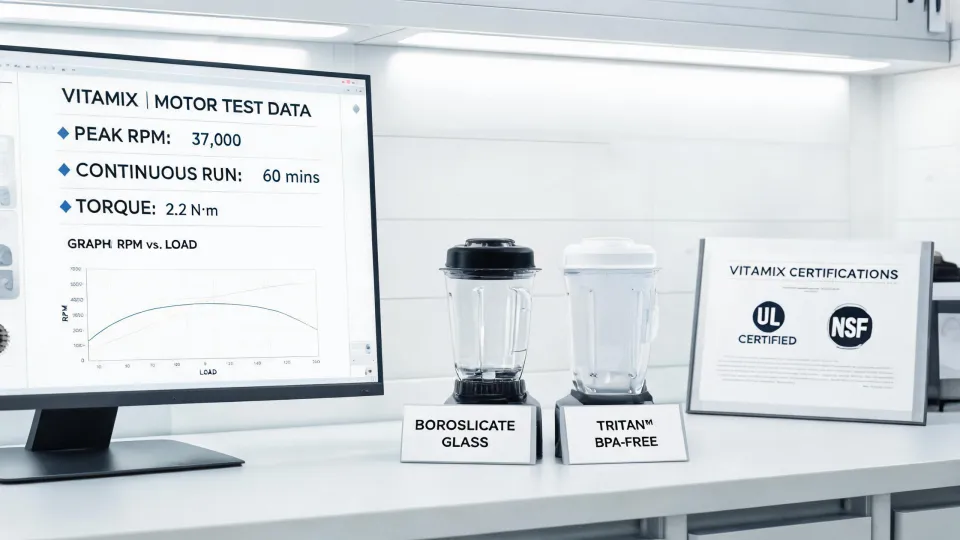
By early 2021, I had spent roughly $350 on three cheap blenders — more than half the price of the Vitamix — and I still had no working blender during a brunch rush. So I bought the Vitamix Professional 750. It has run five to six days a week for over three years: soups, dressings, frozen drinks. No repairs. Not even a new container.
Would I buy the Pro 750 again? For our prep volume, yes. If I ran a high-volume juice bar, I'd buy the Vitamix blender commercial kitchens rely on — the Vita-Prep series — even though it costs more. The lesson isn't 'buy the most expensive blender you can.' The lesson is to compare the purchase price against how many times you'll actually replace the cheaper one. Three replacements in two years versus one machine in three years? The Vitamix wins on math, not just pride.
2. The Real Cost of a Dishwasher Isn't the Price Tag
In spring 2022, our main commercial dishwasher broke. The repair quote was $900 and parts would take a week. We had a catered event in four days, so I went looking for a backup.
This is where my budget-hero brain kicked in. I found a residential undercounter dishwasher for about $500 and thought I had scored. The headline number was $500, but the actual cost of dishwasher ownership ended up being much higher.
That residential unit took 98 minutes for one cycle. A commercial unit does the same load in around three minutes. I didn't check cycle times before buying; I checked the sticker price. Then the health inspector visited, saw the unit, and asked whether it was certified commercial warewashing equipment. It wasn't, and it didn't meet NSF/ANSI Standard 3. In our county, that meant it had to be disconnected.
Total cost of that 'cheap' dishwasher: roughly $500 for the machine, another $200 in install supplies, one lost afternoon, a follow-up inspection fee, and two weeks of employees hand-washing every plate while we waited for the commercial replacement. None of those costs appeared on the price tag.
Do you always need the most expensive dishwasher? No. You need one rated for the workload and certified for the setting. A small NSF-certified undercounter unit is plenty for light use. But comparing residential vs. commercial isn't comparing price tiers — it's comparing two different categories.
3. Fixing a KitchenAid Stand Mixer Looked Cheap. That Was the Mistake.
In 2021, our KitchenAid stand mixer started making a grinding noise. My first instinct? I searched 'fixing KitchenAid stand mixer,' ordered a $60 gear kit, and spent an afternoon with YouTube open on my phone.
That repair worked for about three weeks. Then the grinding came back, louder. I called a repair shop. The quote was $220 to replace the gears and recalibrate the unit. I approved it, thinking it was still less than a new mixer. It was, and four months later the same failure returned.
(Ugh.) By then I had to admit the real problem: a home-duty stand mixer was never built to mix heavy cookie dough six days a week. No replacement gear was going to add commercial capacity. We finally replaced it with a countertop commercial mixer sized for our volume.
Looking back, I should have asked one question before ordering that $60 gear kit: 'Is this machine the right size and class for the job?' If yes, repair is often the smart value move. If no, a repair is just renting time until the next breakdown. The $60 kit plus $220 repair plus $1,900 replacement was a much longer road to the same answer.
To be clear, none of this is an attack on KitchenAid. The mixer is excellent in a home kitchen. The expensive mistake was mine: I kept trying to fix the price problem instead of fixing the capacity problem.
4. What Should Freezer Temperature Be? (I Learned the Hard Way)
What should freezer temperature be? I would have answered 'cold enough' — which really meant I had never measured ours.
In January 2024, a delivery of frozen desserts arrived during a busy week. I loaded everything into the freezer, saw frost on the door, and trusted it. Two weeks later, the ice cream was soft and the berry containers had swollen, then refrozen into one solid block.
I finally bought a $15 freezer thermometer. The air temperature at the warmest spot? 17°F (-8°C). The USDA recommendation is 0°F (-18°C) or below. I was nowhere close, and the ruined inventory cost us around $1,100.
Keep the freezer at 0°F (-18°C) or below. — USDA Food Safety and Inspection Service
Here's the surprising part for me. I didn't need a $2,000 monitoring system with an app and alerts. I needed a cheap thermometer and a five-second check during every opening shift. The expensive fix would have made me feel responsible without addressing the actual gap: I hadn't built the habit of checking.
So this comparison doesn't end with 'spend more.' It ends with 'spend where the risk is.' The risk in a freezer isn't the purchase price. It's the temperature you never checked.
So, Which Option Should You Buy?
If this entire article sounds like 'buy the expensive option in every category,' go back and read the freezer section again. My actual rule is simpler: compare the equipment to the job, not just the price to another price.
- High-volume, continuous-duty equipment — blenders, dishwashers, mixers — should be commercial grade. That's the Vitamix commercial line, an NSF-certified dishwasher, and a properly sized commercial mixer. In my experience, the cheapest option fails first, and the second purchase is the most expensive one.
- Occasional-use equipment can be repaired, especially if the repair costs less than half of replacement and the machine is the right class for the job. Just don't keep repairing a machine that was undersized from day one.
- Safety-critical habits — like knowing your freezer temperature — don't require an expensive gadget. They require attention.
Maybe you're smarter than me and won't need $28,000 of on-the-job training. The shortcut is this: look at total cost of ownership, match the machine to the workload, and buy the option that satisfies both. Price matters. But the cheapest price is only cheap until it breaks.

Greta Lindholm
Greta Lindholm is a household refrigeration analyst covering French-door, side-by-side, top- and bottom-mount refrigerators, mini fridges, beverage coolers, chest freezers, and upright freezers. She applies IEC 62552 and IEC 60335-2-24 while comparing energy consumption, usable volume, pull-down time, compartment temperature stability, freezing capacity, noise, door-seal leakage, refrigerant charge, and ambient-temperature performance. Her guides help importers, distributors, private-label teams, and appliance engineers select platforms around climate class, storage mix, efficiency labels, cabinet dimensions, service access, shipping density, and warranty exposure.