Blendtec Classic 575 vs Vitamix E320: A Procurement Manager’s Honest Breakdown (Plus Ninja and Nutribullet)
2026-08-28 · Greta Lindholm
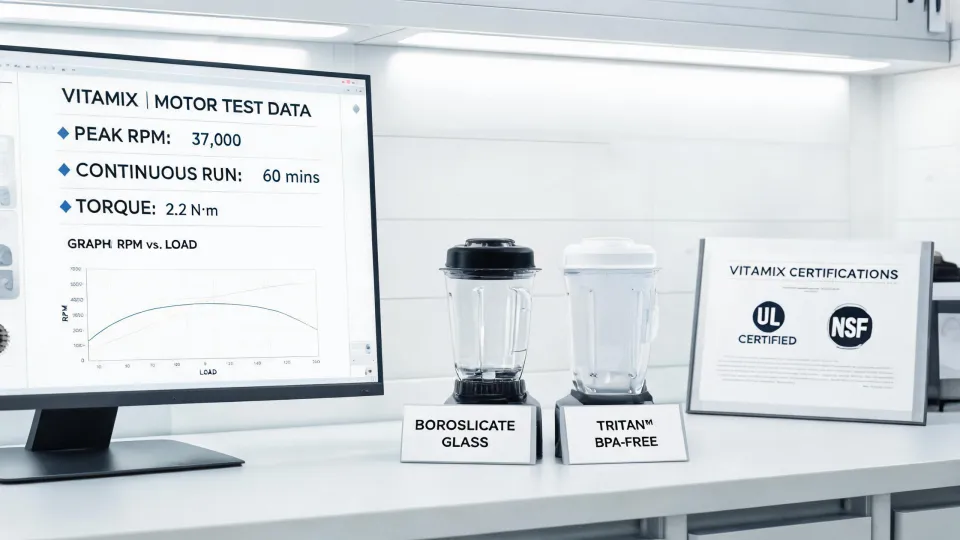
Last October, I sat on the floor of our new prep kitchen with a laptop balanced on a box of plastic gloves, a notepad, and three blenders in front of me. The spreadsheet said one thing. My gut said another. If you’ve ever typed “Blendtec Classic 575 vs Vitamix E320” into a search bar at midnight, you know the feeling.
I’m the procurement manager for a 42-person food group. We run three cafés and one central prep kitchen. I’ve managed the equipment and supply budget for six years—around $180,000 a year—and tracked every invoice in a cost spreadsheet that has saved us more times than I can count. My default position is total cost of ownership, not the cheapest sticker price.
Why I Was Comparing Blenders at All
We added a smoothie program to all three locations. The old blenders weren’t built for that kind of volume. They overheated, the jars cracked, and one even stopped mid-shift during a Saturday rush. The owner came to me and said we needed real machines. So I did what I always do: built a comparison model.
I used three filters: build durability, service access, and cost per batch over three years. Not the upfront price. I also ignored most reviews online, because most reviews come from people making one smoothie a day, not 60 back-to-back batches on a weekday morning.
The Numbers Said Blendtec. My Gut Said Vitamix.
The most direct comparison was Blendtec Classic 575 vs Vitamix E320. I want to be fair: the Blendtec is not a bad machine. A café I know runs one daily and loves it. When I checked public listings again in January 2025, I remember the Blendtec Classic 575 was around $530 and the Vitamix E320 was around $600. But don’t quote me on that—prices change, and I might be misremembering the exact figures.
The numbers pointed to Blendtec. It was about 10% cheaper, similar horsepower, and honestly the touch interface felt more modern. Every spreadsheet analysis pointed to Blendtec. Something felt off, and I couldn’t explain why at first.
Then I called the local commercial appliance repair shop we use when something breaks. I asked about parts availability for both brands. The shop said they stocked Vitamix jars and drive sockets, but they had to order Blendtec parts from a central warehouse. That changed everything.
The retail price was never the real cost. The real cost was a blender sitting dead for three days while we waited on parts. So I went with the Vitamix E320. It cost more upfront. But the local parts availability, the 64-ounce jar, and the fact that we could swap a jar in thirty seconds made it the lower total cost option. Oh, and I should add: we bought a spare jar with it. That was the single smartest procurement decision I made that quarter.
What About Ninja and Nutribullet?
Now let’s talk about the search that gets more traffic than this one ever will: “Vitamix vs Ninja vs Nutribullet.” I get it. I’ve bought both.
A few years ago, I bought a Nutribullet for our break room because a manager wanted to make lunch smoothies. It worked for about three months before the motor started whining. We replaced it with a Ninja. That one lasted longer—maybe a year of light use—but it always felt like a home appliance. Because that’s what it is.
Here’s what you need to know: if you’re buying for home, Ninja and Nutribullet are genuinely good options. If you’re buying for a commercial kitchen, the comparison isn’t even close. The Vitamix E320 in our prep kitchen handled 60 to 80 smoothies during a morning rush and never flinched. The Ninja got hot after ten back-to-back batches. The Nutribullet was never designed for that kind of cycle.
My honest take: if you’re making one smoothie a day, buy the Ninja and save four hundred dollars. If you’re running a business, buy the Vitamix. They’re not competing for the same job.
The Purchases Nobody Writes About
The blender was the big decision, but the project also reminded me that cost control is about the small stuff.
The LG Compact Washer Dryer Combo
We were paying a linen service $460 a month for aprons and towels. I mentioned it to my boss, and we agreed to stop that. We bought an LG compact washer dryer combo for the prep kitchen. The unit plus installation came in under $2,000—I want to say $1,650 for the machine, but don’t quote me on that. It paid for itself in about four months. That one was a no-brainer, but it only showed up because I was tracking the monthly linen invoices.
The Waffle Maker
The waffle maker was my personal hesitation. It felt unnecessary. The kitchen manager asked for one, and I said yes on the condition that we tested it for a week. “What to make in waffle maker” became an internal Google search. We tried Belgian waffles, obviously. Then hash browns, pressed croissants, and a rice waffle that wasn’t bad. The winner for us was hash browns: 7 minutes in the waffle maker instead of 15 on the flat top. It justified itself within a month.
The First Alert Carbon Monoxide Detector
This one was embarrassing. We added a gas line for the waffle maker, and code required a carbon monoxide detector. I bought a First Alert unit, installed it, and tossed the manual because I thought, “What are the odds I’ll need it?” Well, the odds caught up with me when it beeped at 3pm on a Tuesday. I searched “First Alert carbon monoxide detector manual” on my phone while a line of staff pretended not to watch. Turns out it was just a low battery alert. Ten minutes of my life I can’t get back.
I knew I should keep the manual. I skipped that step because it “never matters.” It was the one time it mattered.
What I’d Do Differently
If I had to do the whole project again, I would still choose the Vitamix. But I’d start training earlier. The first time a new staff member loaded a Vitamix with too much frozen fruit and no liquid, it went into overload protection. It wasn’t broken, but it shut down during the worst possible time. I should have built a one-page cheat sheet for every new tool we bought.
The cheapest option is rarely the lowest-priced one. The most expensive option is the one that fails, the one that needs a three-day wait, or the one nobody knows how to use.
The home blender market has improved a lot. What was true in 2020 about Ninja and Nutribullet is not necessarily true today. They are good home blenders. But the commercial fundamentals haven’t changed: you still need a machine that can run all day, with local parts and a warranty you can actually use. That’s why I keep coming back to Vitamix. In my opinion, the extra money is worth it for a business. For a home user? Get the Ninja. For a high-volume café? Get the Vitamix. Trust me on this one.

Greta Lindholm
Greta Lindholm is a household refrigeration analyst covering French-door, side-by-side, top- and bottom-mount refrigerators, mini fridges, beverage coolers, chest freezers, and upright freezers. She applies IEC 62552 and IEC 60335-2-24 while comparing energy consumption, usable volume, pull-down time, compartment temperature stability, freezing capacity, noise, door-seal leakage, refrigerant charge, and ambient-temperature performance. Her guides help importers, distributors, private-label teams, and appliance engineers select platforms around climate class, storage mix, efficiency labels, cabinet dimensions, service access, shipping density, and warranty exposure.